
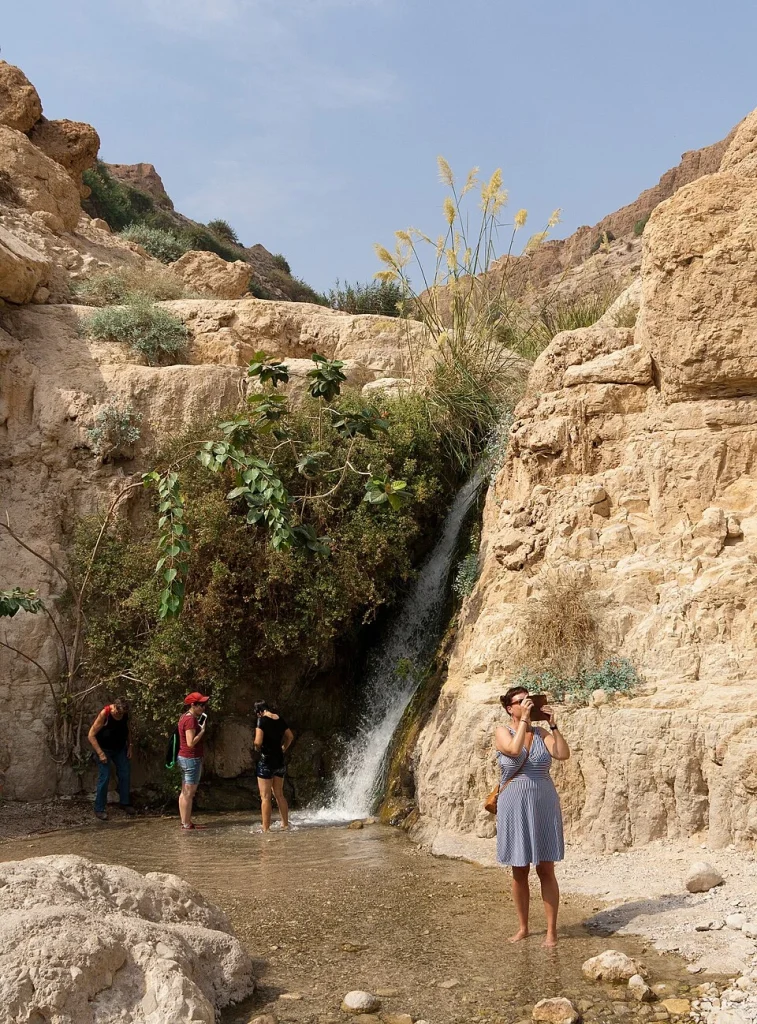

The opening photograph holds several scales together: a waterfall, vegetation, visitors and a dry cliff. The greenery belongs to a particular oasis setting. It should not be read as the appearance of the entire western shoreline, or as a promise that every path shown in an older photograph remains available.
The image was made at David Waterfall in En Gedi, Israel, in October 2015. People remain in the frame because they are part of this documented view. We have not removed them to imply an empty landscape or used their presence to endorse a tour.

Jerusalem Boutique Tour from Tel Aviv
This tour is ranked the number 1 Experience in Israel. Our motto: don't be perfect, be honest. No souvenir shop if you don't want to. We leave about...

Travel to Bethlehem Half Day Guided Tour from Jerusalem
This Bethlehem half day tour from Jerusalem is designed to give travelers maximum insight, comfort, and value in a l...

Masada and the Dead Sea Day Trip from Jerusalem
Discover two of Israel's must-see sights on this memorable day trip from Jerusalem. You'll explore the legendary rui...

Travel To Bethlehem, Jericho & Jordan River - Tour From Jerusalem
Experience the ultimate Holy Land journey on our Bethlehem, Jericho & Jordan River Tour. Begin in Bethlehem, the bir...
Understand the named reserve
The Israel Nature and Parks Authority’s En Gedi page describes an oasis between the desert cliffs and the Dead Sea. Its current visitor page also carries flood-damage and restoration information. Read the latest notice before choosing a route; the general reserve description and a specific trail’s present availability are different kinds of information.
Keep the reserve name, intended entrance and chosen route together when discussing arrangements. A regional tour title may mention En Gedi without explaining the time available inside it or which part is intended. Ask for the actual programme instead of using an attractive waterfall photograph as the itinerary.
Let water explain the contrast
Look at where the vegetation sits in relation to the visible water and rock. A close photograph is useful for this relationship, but it cannot establish an ecological boundary or identify every plant. Treat unfamiliar species as questions for a qualified guide or a clearly labeled authority resource.
The contrast can be appreciated without a dramatic adventure narrative. A short, permitted viewpoint with time to observe may offer more understanding than an ambitious route chosen only for its photographic reputation. Follow the reserve’s current instructions and do not treat a visible ledge, pool or path in our image as permission to enter it.
Read an old image responsibly
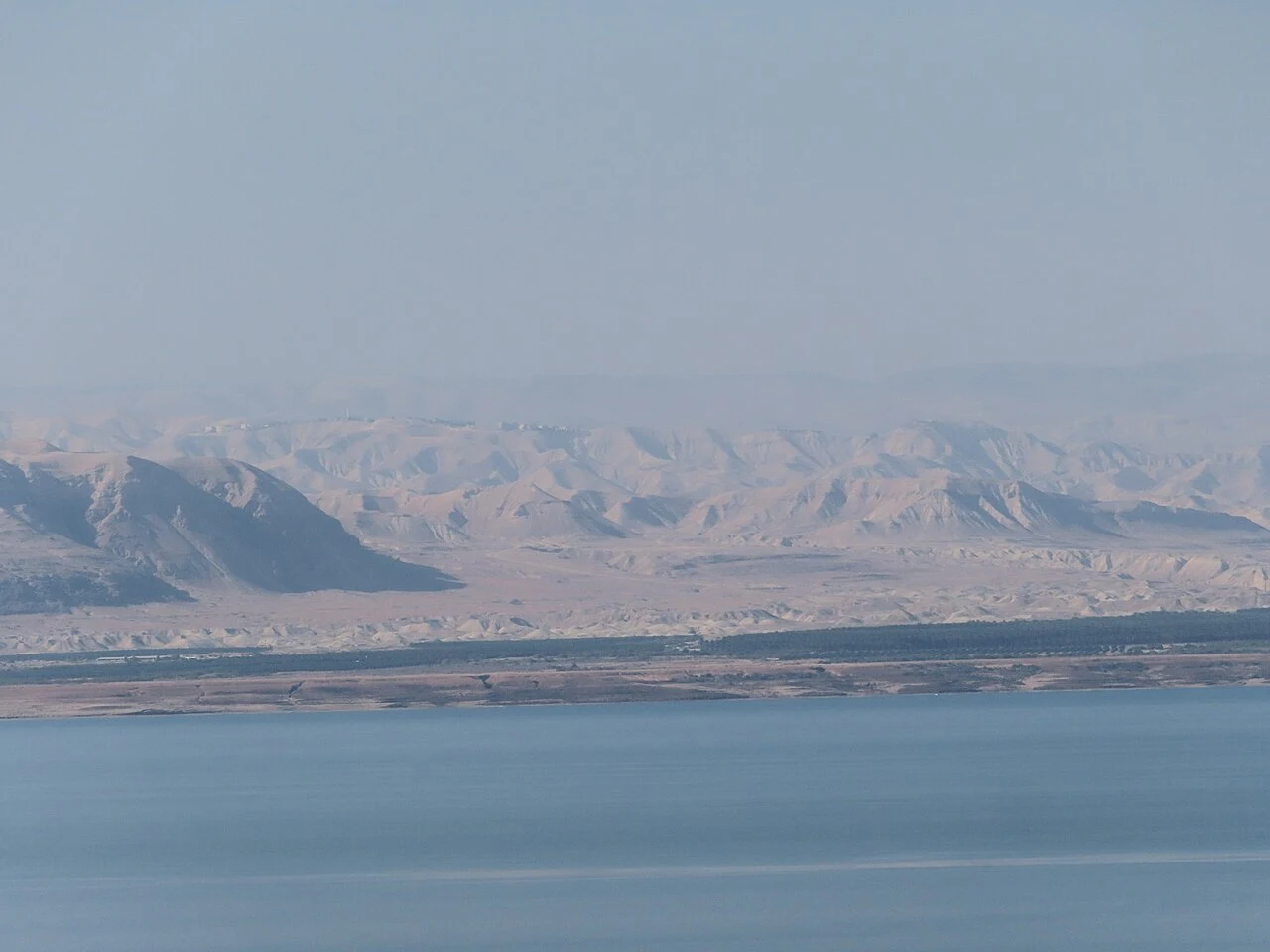

The second photograph is a distant view from Jordan in November 2021. It changes the scale from a named oasis to water, haze and mountains across the basin. It is deliberately labeled with the photographer’s side of the lake. These two images form a visual comparison, not a suggested transfer between them.
Ask three questions of a destination photograph: where was the camera, when was the image made, and what is outside the frame? Those questions help prevent a close oasis view from becoming a misleading picture of an entire region. They also leave room for changing conditions.
Choose the service by its written details
If transport or guiding is part of your plan, confirm the starting location, the named reserve stop and the provider’s responsibilities. Read exclusions and current cancellation terms alongside the headline. When access changes, direct the operational question to the organization providing the visit.
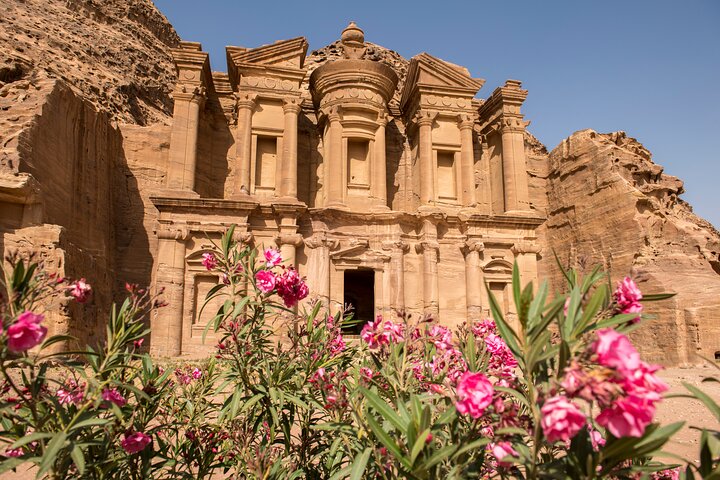
3-Day Petra and Wadi Rum Tour from Jerusalem
This fully guided 3 day tour from Jerusalem will take you through Jordan’s extraordinary history and past some of its most beautiful natural wonde...

Jerusalem: Dual Narrative Tour
Two Tour Guides, One City. Featured by National Geographic and TED, the Dual Narrative Tour (TM) is a multi-pers...

2-Day Petra Tour from Jerusalem
Explore the wonders of Jordan on this two day guided tour from Jerusalem. Discover the world wonder of Petra - stunn...

In the Footsteps of Jesus - Private Tour of Nazareth & the Sea of Galilee
To get a truly deep insight of the Holyland choose this private VIP tour with the most passionate, knowledgeable and...
Our shore-planning guide explains why a basin-wide view is only an introduction. En Gedi deserves its own context, and the practical visit deserves its own clear arrangements. Use the authority’s current page for access decisions rather than relying on a historical image or a general comparison listing.