
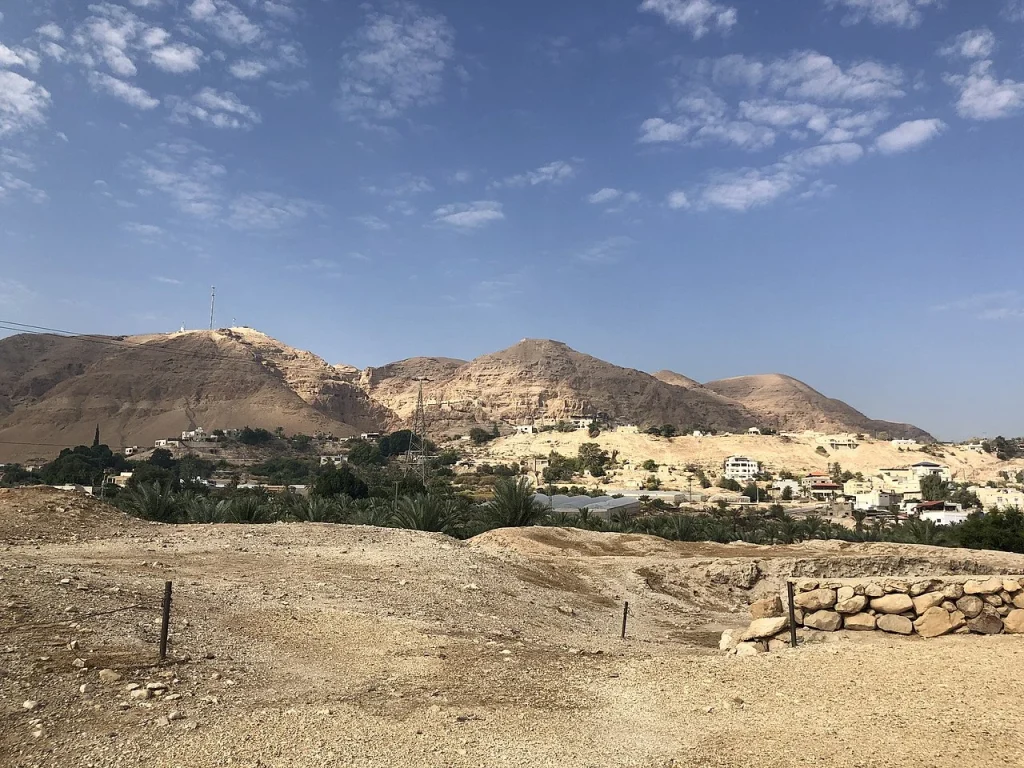

Seen from Tell es-Sultan, Jericho includes palms, buildings, roads and the wider valley landscape. This is a useful starting point for a regional story that belongs to the Palestinian West Bank. It is not a substitute name for a Dead Sea resort area, and a visit to the town should be planned on its own stated terms.
Our panoramic photograph dates from November 2022. The foreground and distant town share one frame, but not one historical period. Looking across them can help raise questions about settlement and water without collapsing the modern place into an archaeological backdrop.

Jerusalem Boutique Tour from Tel Aviv
This tour is ranked the number 1 Experience in Israel. Our motto: don't be perfect, be honest. No souvenir shop if you don't want to. We leave about...

Travel to Bethlehem Half Day Guided Tour from Jerusalem
This Bethlehem half day tour from Jerusalem is designed to give travelers maximum insight, comfort, and value in a l...

Masada and the Dead Sea Day Trip from Jerusalem
Discover two of Israel's must-see sights on this memorable day trip from Jerusalem. You'll explore the legendary rui...

Travel To Bethlehem, Jericho & Jordan River - Tour From Jerusalem
Experience the ultimate Holy Land journey on our Bethlehem, Jericho & Jordan River Tour. Begin in Bethlehem, the bir...
Begin with a precise historical reference
UNESCO’s Ancient Jericho/Tell es-Sultan listing locates the property northwest of modern Jericho, in Palestine, near the perennial ‘Ain es-Sultan spring. Its account identifies substantial prehistoric settlement remains, including Neolithic monumental features. The spring and the archaeological site provide specific context; they do not turn every building in the modern town into an ancient monument.
Use the listing and on-site interpretation to distinguish visible remains from reconstructions or broader historical narratives. A wall, mound or excavation edge can prompt a question, but its appearance alone does not establish a date. Ask what evidence supports an explanation and which parts remain debated.
Keep the town in the present tense
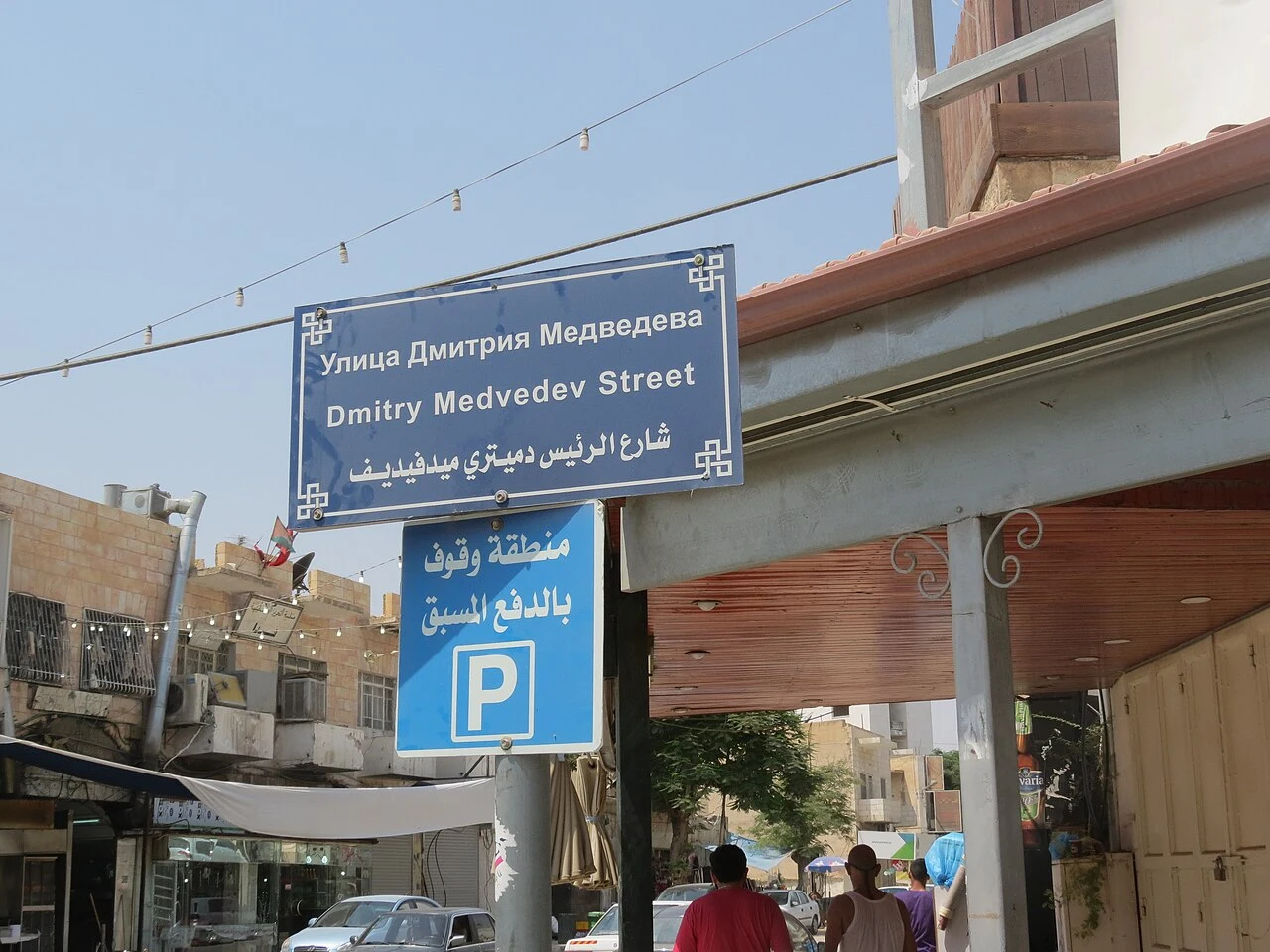

The street photograph, made in August 2016, shows an ordinary corner with shops, vehicles, signs and people. It is included as dated documentary context, not as a current business directory or a recommendation of any person in the frame. A street name visible in an old photograph should be checked before using it for navigation.
Give present-day life its own attention. When choosing a meal, a guide or an overnight stay, identify the actual business and ask about the service being offered. We have not arranged interviews with residents or claimed a personal relationship with a host. Local knowledge should be heard from the people providing it, with their role and contribution clear.
Connect water and settlement carefully
A spring landscape invites a question about the resources around a place. It does not justify inventing a continuous story of daily life across thousands of years. Separate the archaeological account from what you observe today. A cultivated patch or a line of palms is visible evidence of the photographed setting; a claim about its exact source of irrigation would need further research.
One practical approach is to choose a small number of questions before a visit. How is the site interpreted? What does the spring contribute to the published account? Which parts of the town would a local guide like visitors to understand beyond the archaeological stop? Leave enough time to listen to an answer.
Plan a distinct visit
Confirm the exact meeting point, the sites named in the programme and the arrangements for returning. The fact that Jericho appears in a Dead Sea regional guide does not establish a connection to any eastern- or western-shore booking. Current access and entry arrangements must come from the responsible authorities and the provider of the particular service.
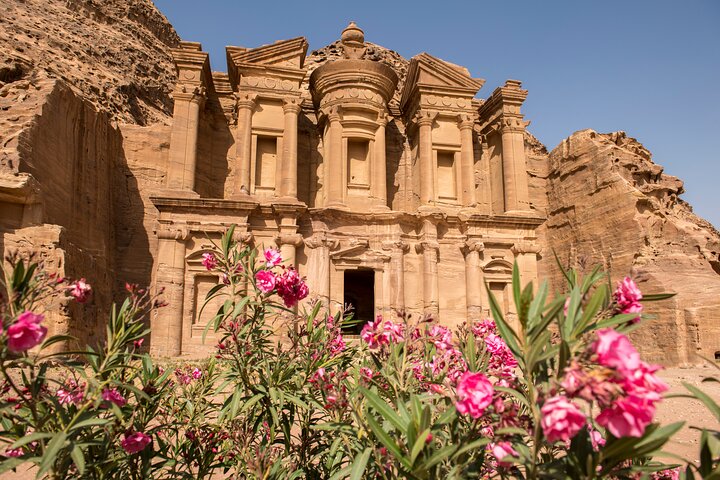
3-Day Petra and Wadi Rum Tour from Jerusalem
This fully guided 3 day tour from Jerusalem will take you through Jordan’s extraordinary history and past some of its most beautiful natural wonde...

Jerusalem: Dual Narrative Tour
Two Tour Guides, One City. Featured by National Geographic and TED, the Dual Narrative Tour (TM) is a multi-pers...

2-Day Petra Tour from Jerusalem
Explore the wonders of Jordan on this two day guided tour from Jerusalem. Discover the world wonder of Petra - stunn...

In the Footsteps of Jesus - Private Tour of Nazareth & the Sea of Galilee
To get a truly deep insight of the Holyland choose this private VIP tour with the most passionate, knowledgeable and...
Our comparison page retains the provider’s existing Dead Sea destination. If a listing interests you, check whether Jericho is actually named and which parts are included. Keep the town’s Palestinian context visible in your notes, and give both the archaeological landscape and contemporary life room in the story.